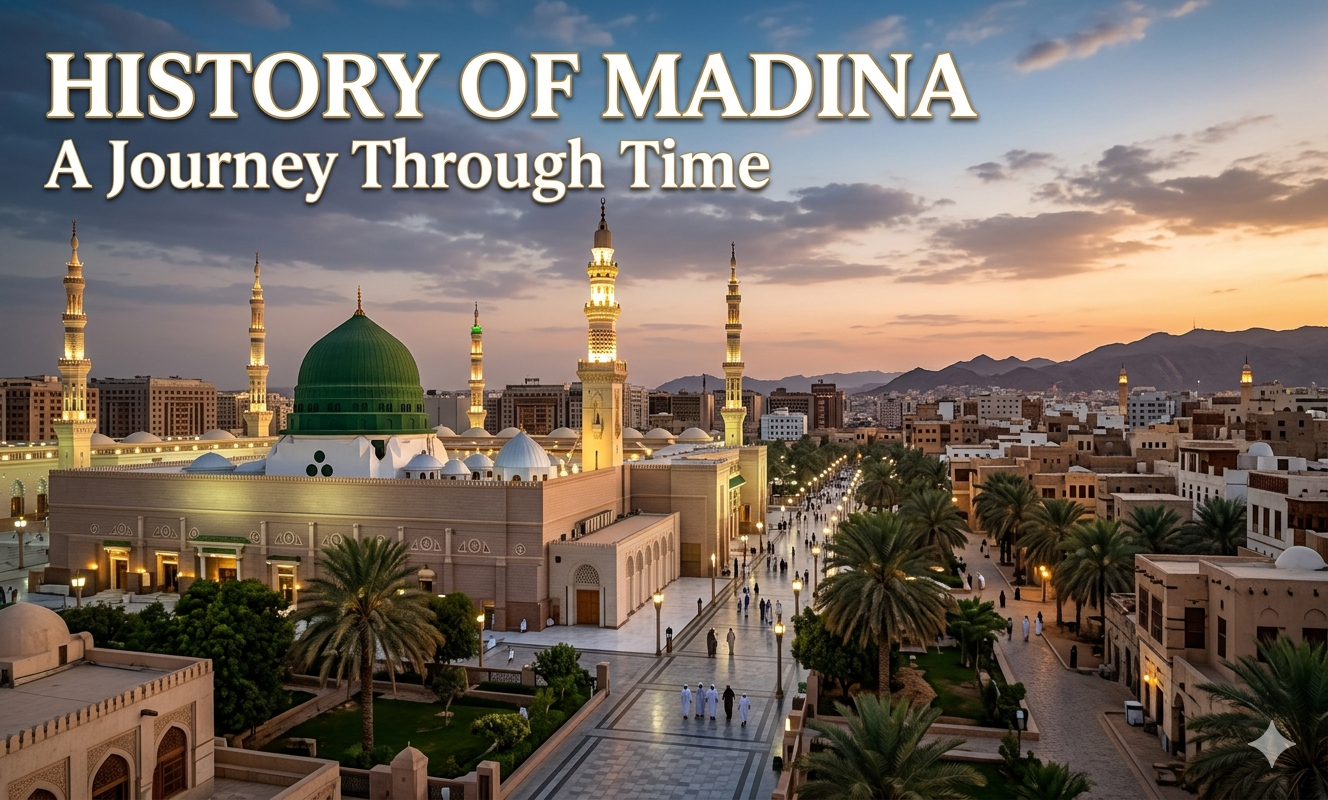
History of Madina – From Ancient Yathrib to the City of the Prophet
Madina, officially known as Al-Madinah Al-Munawwarah, is the second holiest city in Islam after Makkah. It holds a special place in Islamic history as the city where Prophet Muhammad (PBUH) established the first Muslim community and laid the foundation of an Islamic society. The history of Madina is rich, spiritual, and deeply connected with the growth of Islam.
Ancient Madina: The City of Yathrib
Before the arrival of Islam, Madina was known as Yathrib. It was a fertile oasis city inhabited by different Arab tribes such as Aws and Khazraj, along with several Jewish tribes.
Unlike Makkah, which was a commercial hub, Yathrib was mainly an agricultural city known for date farming. However, the city faced continuous tribal conflicts, especially between the Aws and Khazraj tribes, which created instability in the region.
Arrival of Prophet Muhammad (PBUH)
The most important turning point in the history of Madina came in 622 CE, when Prophet Muhammad (PBUH) migrated from Makkah to Yathrib. This migration is known as the Hijrah and marks the beginning of the Islamic calendar.
The people of Yathrib welcomed the Prophet and accepted Islam, after which the city was renamed Madinat an-Nabi (City of the Prophet), later shortened to Madina.
Establishment of the First Islamic State
After arriving in Madina, Prophet Muhammad (PBUH) established the first Islamic state based on justice, equality, and unity.
One of his first actions was the construction of Masjid an-Nabawi, which became not only a place of worship but also a center for education, governance, and community gatherings.
He also created the Constitution of Madina, a historic agreement that ensured peaceful coexistence between Muslims, Jews, and other communities.
Brotherhood and Social Reform
Prophet Muhammad (PBUH) introduced the concept of brotherhood (Mu’akhah) between the migrants (Muhajirun) from Makkah and the local helpers (Ansar) of Madina. This created strong unity and support within the Muslim community.
He also implemented social reforms such as:
- Equal rights and justice
- Protection of women and children
- Fair trade practices
- Care for the poor and needy
Major Battles and Defense of Madina
Madina became the center of Islamic strength, but it also faced threats from enemies.
Important battles fought during this period include:
- Battle of Badr
- Battle of Uhud
- Battle of the Trench (Khandaq)
These battles were crucial in defending the Muslim community and strengthening Islam.
Expansion of Islam from Madina
From Madina, Islam spread rapidly across the Arabian Peninsula. Delegations from different regions came to accept Islam, and the message reached far beyond Arabia.
Madina served as the political, spiritual, and administrative center of the Islamic world during the lifetime of Prophet Muhammad (PBUH).
After the Prophet (PBUH)
After the death of Prophet Muhammad (PBUH) in 632 CE, Madina remained an important center under the leadership of the first Caliphs (Rashidun Caliphate).
Although the political capital later shifted to other cities like Damascus and Baghdad, Madina always remained a spiritual center for Muslims.
Development Through Islamic Empires
Over centuries, various Islamic empires contributed to the development of Madina:
- Expansion of Masjid an-Nabawi
- Construction of roads and facilities for pilgrims
- Protection and preservation of Islamic heritage
Ottoman rulers, in particular, played a significant role in maintaining the holy sites.
Modern Madina
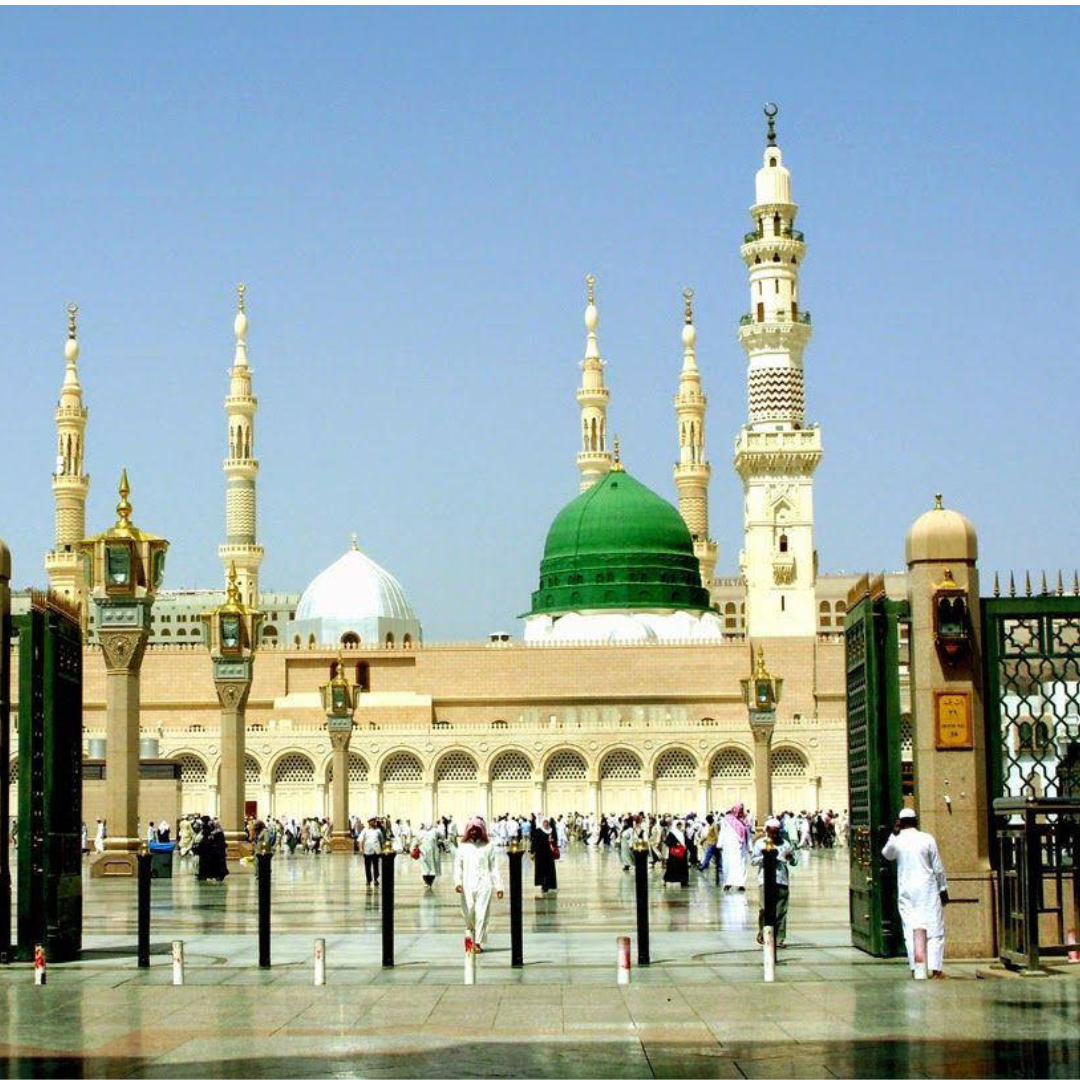
Today, Madina is a modern city with advanced infrastructure and facilities for millions of pilgrims visiting every year.
Key features of modern Madina include:
- Expansion of Masjid an-Nabawi
- High-speed transportation systems
- Modern hotels and accommodations
- Digital services for pilgrims
Despite modernization, the city has preserved its spiritual atmosphere and historical significance.
Importance of Madina in Islam
Madina holds a unique and deeply respected place in Islam, making it one of the most spiritually significant cities for Muslims around the world. It is known as the city of Prophet Muhammad (PBUH), where he lived, taught, and established a strong foundation for the Muslim community. His presence transformed Madina into a center of guidance, faith, and unity, and it continues to hold that importance even today.
One of the most important landmarks in Madina is Masjid an-Nabawi, the mosque built by Prophet Muhammad (PBUH). It is the second holiest mosque in Islam after Masjid al-Haram in Makkah. Millions of Muslims visit this mosque every year to offer prayers and send blessings upon the Prophet. The peaceful environment of the المسجد creates a strong spiritual connection for visitors.
- It is the city of Prophet Muhammad (PBUH)
- It houses Masjid an-Nabawi
- It is the place where the first Islamic society was established
- It represents unity, peace, and brotherhood
Conclusion
The history of Madina is a story of transformation—from a conflict-filled city to the center of peace, unity, and Islamic governance. It played a crucial role in shaping Islam and continues to inspire millions of people around the world.
Understanding the history of Madina not only strengthens knowledge but also deepens spiritual connection for those who visit or learn about this blessed city.
FAQs on History of Madina
1. What was Madina called before Islam?
Madina was known as Yathrib before the arrival of Islam.
2. Why is Hijrah important in Madina’s history?
Hijrah marks the migration of Prophet Muhammad (PBUH) to Madina and the beginning of the Islamic calendar.
3. What is Masjid an-Nabawi?
It is the mosque built by Prophet Muhammad (PBUH) in Madina and one of the holiest sites in Islam.
4. What was the Constitution of Madina?
It was an agreement that ensured peace and cooperation among different communities in the city.
5. Why is Madina important for Muslims?
Madina is the city of the Prophet and the place where the first Islamic society was established.
Mumbai Pilgrims Note
If you are planning your journey from India, you can easily book your trip through Haj tours Mumbai, Umrah tours Mumbai, Haj packages Mumbai, Umrah packages Mumbai, and short haj from Mumbai, ensuring a smooth, comfortable, and well-organized spiritual experience.
Also Read this : History of Islam
Also Watch this …