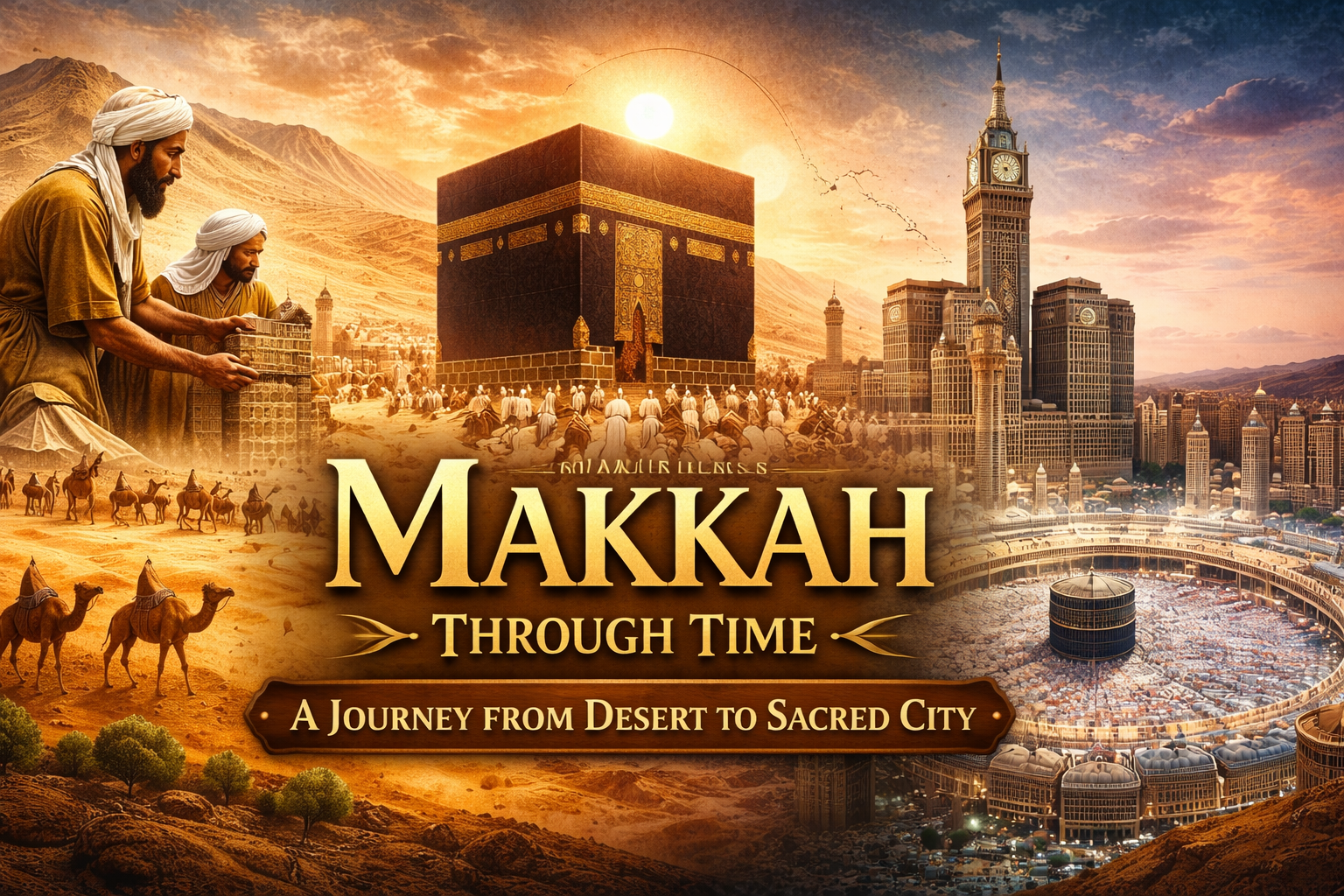
Makkah Through Time: A Journey from Desert to Modern City
History of Makkah: Makkah is one of the most sacred and holy historically significant cities in the world. It holds a central place in Islam and is deeply connected to the lives of Prophets, especially Prophet Ibrahim (AS) and Prophet Muhammad (PBUH). Every year, millions of Muslims visit Makkah to perform Hajj and Umrah, making it a spiritual center for the global Muslim community. The history of Makkah spans thousands of years and reflects a journey of faith, struggle, and transformation.
Ancient Origins of Makkah
The history of Makkah begins with Prophet Ibrahim (AS), who was commanded by Allah to leave his wife Hajar (RA) and son Ismail (AS) in the barren desert of Makkah. At that time, the area had no water, vegetation, or human settlement.
Soon after, the miracle of Zamzam took place when water sprang from the ground near baby Ismail (AS). This led to the settlement of people in the area, gradually turning Makkah into a small but important community.
Later, Prophet Ibrahim (AS) and Prophet Ismail (AS) built the Kaaba as a house of worship dedicated to one God. This marked the beginning of Makkah as a religious center.
Makkah as a Religious and Trade Hub
Over time, Makkah grew into an important city, not only for religious reasons but also for trade. Located along major trade routes, it became a center for merchants traveling between Asia, Africa, and the Middle East.
However, the original message of monotheism was gradually lost. Idol worship became common, and the Kaaba was filled with idols. Despite this, pilgrimage to Makkah continued, showing its lasting spiritual importance.
Birth of Prophet Muhammad (PBUH)
In 570 CE, Prophet Muhammad (PBUH) was born in Makkah. He belonged to the Quraysh tribe, which was responsible for managing the Kaaba.
Known for his honesty and integrity, he was respected in society. At the age of 40, he received the first revelation from Allah, marking the beginning of Islam.
Early Islam in Makkah
The early years of Islam in Makkah were challenging. Prophet Muhammad (PBUH) began preaching the message of one God and equality, which was strongly opposed by the leaders of Makkah.
Muslims faced persecution, torture, and social boycott. Despite these hardships, Islam slowly spread among people who believed in truth and justice.
Migration to Madinah (Hijrah)
Due to increasing oppression, Prophet Muhammad (PBUH) and his followers migrated to Madinah in 622 CE. This event, known as Hijrah, marks a turning point in Islamic history.
While Makkah remained under non-Muslim control for some time, the Muslim community grew stronger in Madinah.
Conquest of Makkah
In 630 CE, Prophet Muhammad (PBUH) returned to Makkah with a large number of followers. The city was conquered peacefully, without major conflict.
One of the most significant actions taken during this time was the removal of idols from the Kaaba, restoring it as a place of worship for one God.
This event marked the purification of Makkah and its return to the original teachings of Prophet Ibrahim (AS).
Makkah After the Prophet
After the death of Prophet Muhammad (PBUH), Makkah remained a central religious city in Islam. It continued to attract pilgrims from all over the world.
During different Islamic empires, including the Umayyad and Abbasid periods, Makkah received attention in terms of infrastructure and facilities for pilgrims.
Ottoman Era and Development
During the Ottoman Empire, Makkah saw further development. Roads were improved, and facilities for pilgrims were expanded. Security was also strengthened to ensure safe travel for people coming from distant regions.
The Ottomans maintained and preserved the holy sites, contributing to the city’s growth and importance.
Modern Transformation of Makkah
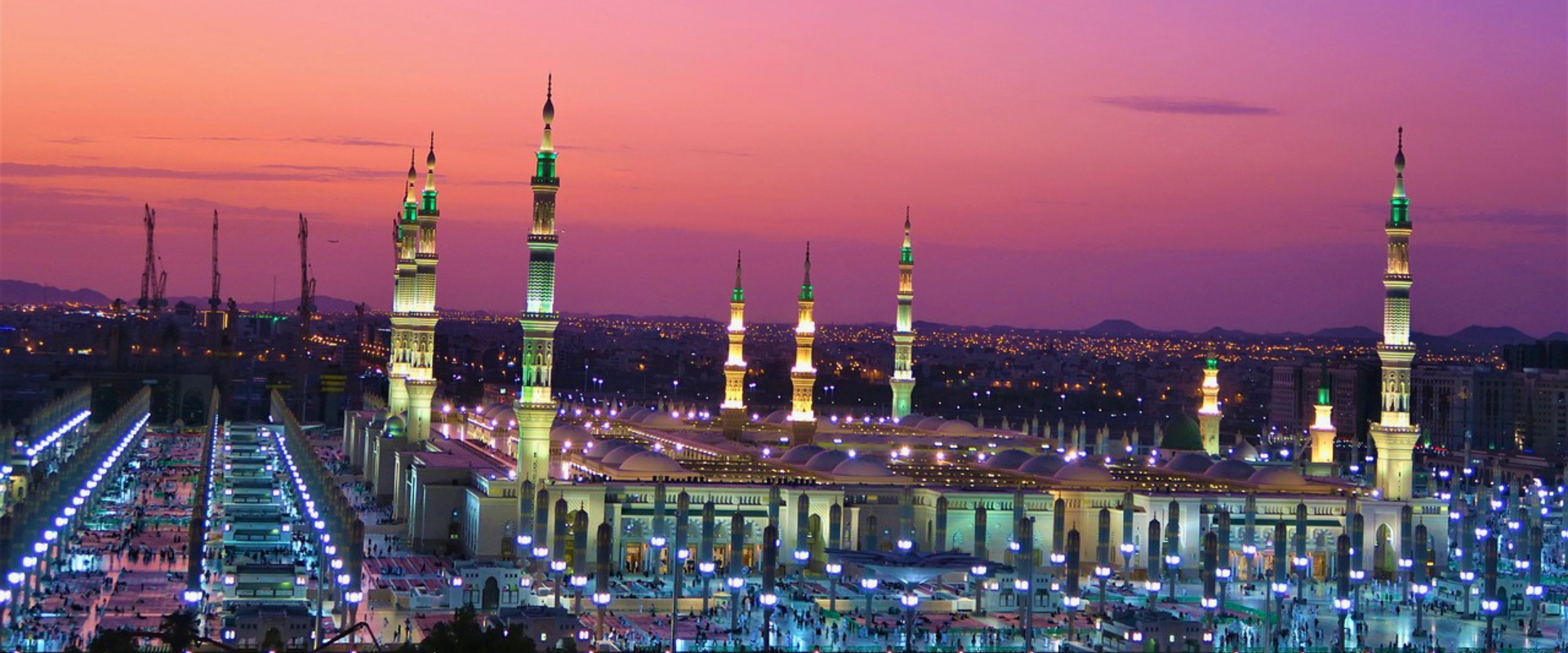
In the modern era, Saudi Arabia has made massive investments in the development of Makkah. The city has undergone significant transformation to accommodate millions of pilgrims every year.
Key developments include:
- Expansion of the Grand Mosque (Masjid al-Haram)
- Modern hotels and accommodation
- Advanced transportation systems
- Digital services for pilgrims
- Improved crowd management systems
These developments have made Hajj and Umrah more organized and accessible for Muslims worldwide.
Importance of Makkah in Islam
Makkah holds unmatched importance in Islam:
- It is the birthplace of Prophet Muhammad (PBUH)
- It is home to the Kaaba, the direction of prayer (Qibla)
- It is the center of Hajj and Umrah pilgrimage
- It represents unity and equality among Muslims
Every Muslim turns toward the Kaaba while praying, symbolizing unity in worship.
Makkah in the Modern World
Today, Makkah is one of the most visited cities globally due to Hajj and Umrah. Millions of pilgrims gather here every year, making it one of the largest religious gatherings in the world.
The city continues to evolve with technology, infrastructure, and services aimed at improving the pilgrim experience while preserving its spiritual significance.
Conclusion
The history of Makkah is a journey that began in a barren desert and transformed into the spiritual heart of Islam. From the time of Prophet Ibrahim (AS) to the modern era, Makkah has remained a symbol of faith, unity, and devotion.
Its rich history, combined with continuous development, makes it a unique city that connects the past with the present. For Muslims, Makkah is not just a place—it is a lifelong spiritual destination that holds deep emotional and religious value.
For Muslims planning religious journeys, especially from India, services like Haj tours Mumbai, Umrah tours Mumbai, Haj packages Mumbai, Umrah packages Mumbai, and short Haj from Mumbai help in organizing smooth and comfortable travel experiences.
These services make it easier for pilgrims to focus on their spiritual journey while handling travel, accommodation, and arrangements.
FAQs on Makkah History & Digital Development
1. What are the most important historical landmarks in Makkah?
Key historical landmarks include the Kaaba, Masjid al-Haram, Jabal al-Noor (Cave of Hira), and the Zamzam well. These sites are deeply connected to Islamic history and the life of Prophet Muhammad (PBUH).
2. What is the “Smart Makkah” initiative?
Smart Makkah is a modern program that uses artificial intelligence and digital technology to manage crowds, monitor pilgrim movement, and improve safety and services during Hajj and Umrah.
3. How does technology help manage millions of pilgrims in Makkah?
Authorities use digital systems such as smart cards, surveillance cameras, AI-based crowd control, and mobile apps to track movement, prevent overcrowding, and ensure smooth operations during peak seasons.
4. What role does digital infrastructure play in Hajj and Umrah?
Digital infrastructure allows pilgrims to book services, access permits, receive real-time updates, and navigate the holy sites easily, making the journey more organized and stress-free.
Also Read this Article: Nusuk Card Discounts
Also Watch this…