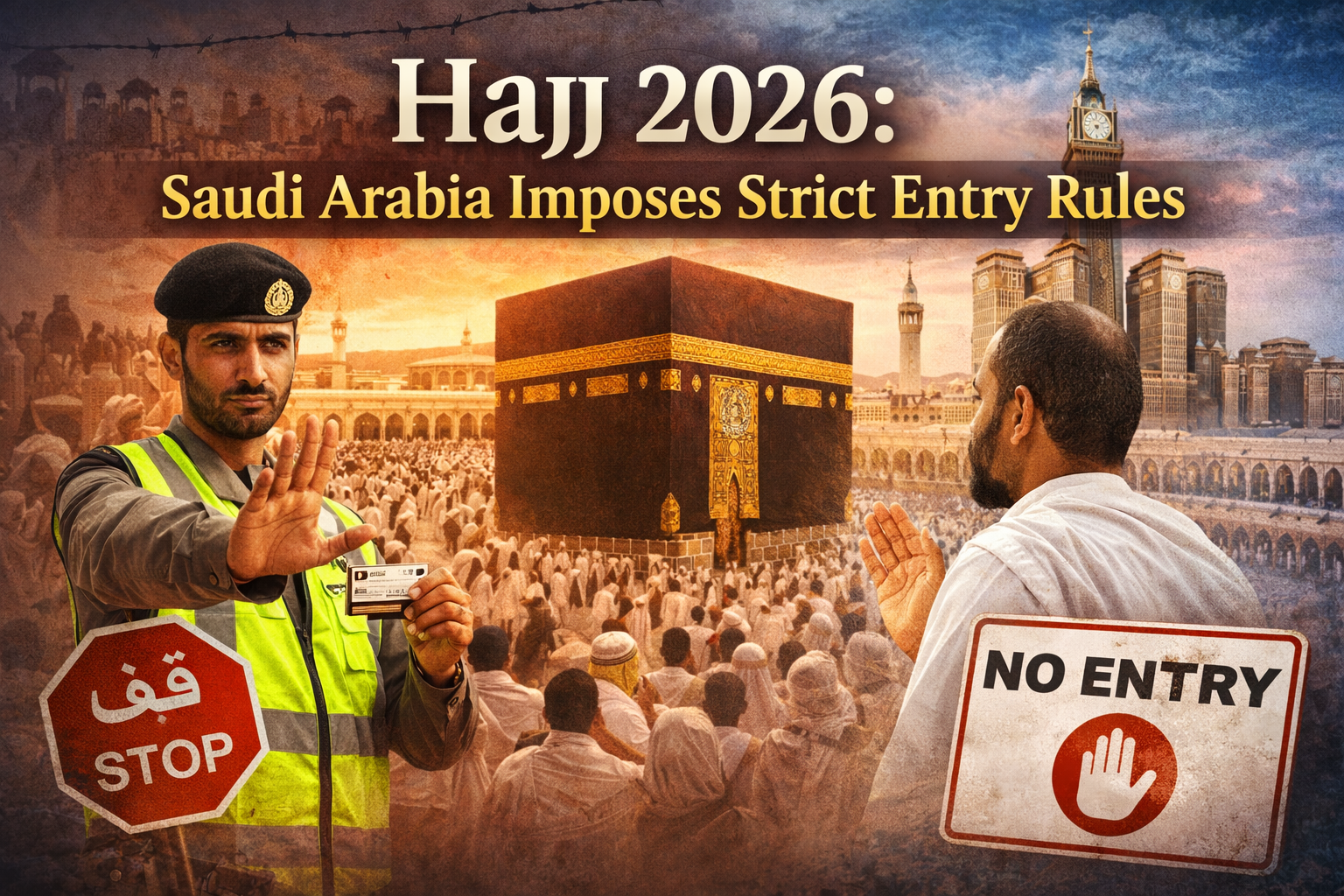
Saudi Arabia has announced major new restrictions ahead of Hajj 2026, introducing strict rules to control the movement of pilgrims and ensure better safety and organization. The government has temporarily halted entry into Makkah without official permits and suspended Umrah visas as part of its preparations for one of the world’s largest religious gatherings.
According to recent reports, authorities have made it mandatory for all individuals—both residents and international visitors—to carry valid Hajj permits to enter Makkah. Anyone without proper authorization will not be allowed into the holy city during this period. In addition to entry restrictions, Saudi Arabia has also suspended the issuance of new Umrah visas. Pilgrims currently in the country on Umrah visas have been instructed to leave before specific deadlines, ensuring that the system remains organized before the start of Hajj.
These measures are part of a broader effort to manage the large number of pilgrims expected in 2026. By limiting access and enforcing strict compliance rules, authorities aim to prevent overcrowding and improve overall safety conditions.
Officials have also introduced clear timelines and guidelines that pilgrims must follow. Missing deadlines or failing to meet requirements could result in penalties or denial of entry. The move highlights Saudi Arabia’s focus on maintaining discipline and structure during the Hajj season.
Experts say that such strict regulations are necessary due to the massive scale of the pilgrimage. Millions of people gather in Makkah each year, and without proper control, it can lead to safety risks, congestion, and logistical challenges.
In recent years, Saudi Arabia has been strengthening its Hajj management system through digital tools, permit systems, and advanced crowd control technologies. These new restrictions are a continuation of that strategy, ensuring that only registered and approved pilgrims can participate.
the new rules for Hajj 2026 reflect Saudi Arabia’s commitment to improving safety, organization, and the overall pilgrimage experience, even if it means implementing stricter controls on entry and travel.