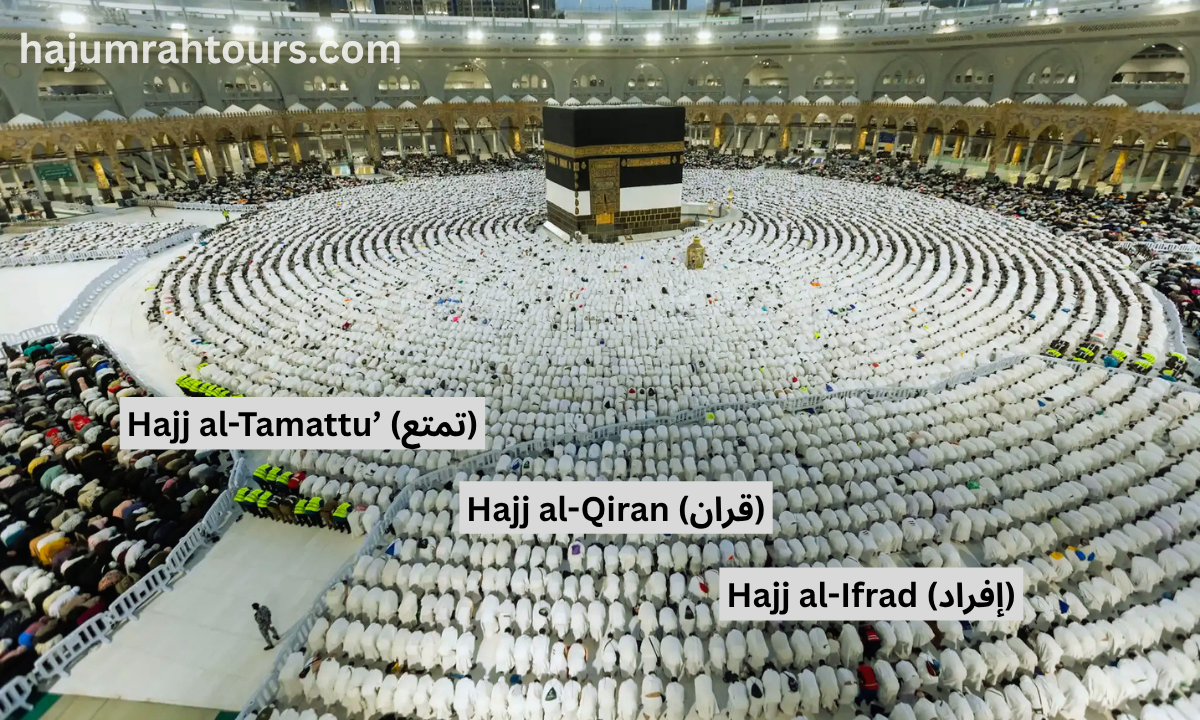
Types of Hajj in Islam: Hajj (الحج) is one of the five pillars of Islam and holds great importance in the life of every Muslim. Every year, millions of Muslims travel to Makkah (مكة) to perform this sacred pilgrimage. While many people know the basic steps of Hajj, fewer understand that there are different types of Hajj in Islam.
If you are planning your journey or simply want to learn, this guide will explain the types of Hajj in a simple, clear, and practical way. It is written in easy language so that beginners can understand without confusion.
What is Hajj?
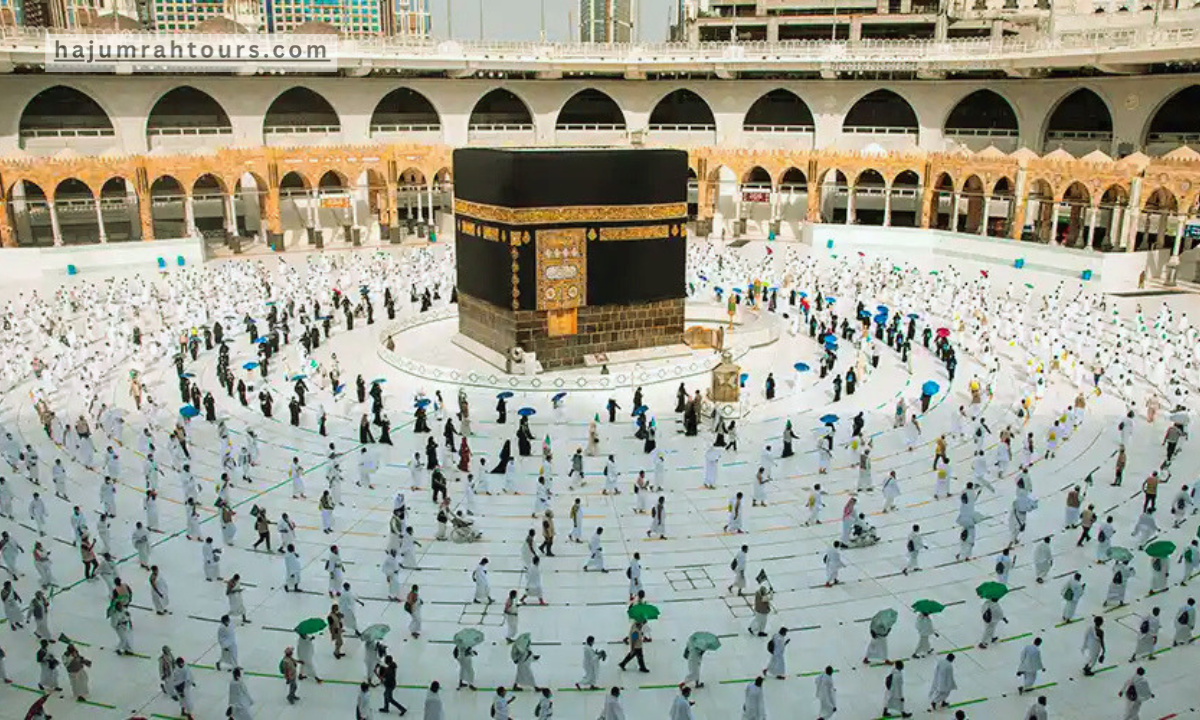
Hajj is an annual pilgrimage to the Holy Kaaba (الكعبة) in Makkah, performed during the Islamic month of Dhul Hijjah (ذو الحجة).
It is Fard (obligatory) for every Muslim who:
- Is physically fit
- Has financial ability
- Can travel safely
Hajj is not just a journey—it is an act of worship that teaches patience, equality, and complete submission to Allah .
Why Are There Different Types of Hajj?
Islam provides ease and flexibility for Muslims. Because people travel from different parts of the world and have different situations, there are three types of Hajj.
These types allow pilgrims to choose what is easiest and most suitable for them.
The Three Types of Hajj in Islam
There are three main types of Hajj:
- Hajj al-Tamattu’ (تمتع)
- Hajj al-Qiran (قران)
- Hajj al-Ifrad (إفراد)
Each type has its own method and rules.
1. Hajj al-Tamattu’ (تمتع)
What is Hajj Tamattu’?
Hajj al-Tamattu’ is the most common and easiest type of Hajj, especially for people traveling from outside Saudi Arabia.
In this type:
- You perform Umrah (عمرة) first
- Then you exit Ihram
- Later, you enter Ihram again for Hajj
Step-by-Step Process
Step 1: Perform Umrah
- Enter Ihram (الإحرام)
- Perform Tawaf (الطواف)
- Perform Sa’i (السعي)
- Cut or shave hair
After this, you come out of Ihram and can live normally until Hajj begins.
Step 2: Perform Hajj
- On 8th Dhul Hijjah, enter Ihram again
- Complete all Hajj rituals
Key Features of Hajj Tamattu’
- Two separate Ihram states
- Break between Umrah and Hajj
- Easier and more flexible
Sacrifice (Qurbani)
In this type, animal sacrifice is required.
Who Should Choose Tamattu’?
- First-time pilgrims
- People coming from other countries
- Those who want a simpler process
2. Hajj al-Qiran (قران)
What is Hajj Qiran?
In Hajj al-Qiran:
- You perform Umrah and Hajj together
- You remain in Ihram the entire time
There is no break between Umrah and Hajj.
Step-by-Step Process
Step 1: Enter Ihram
- Make intention for both Umrah and Hajj together
Step 2: Perform Umrah
- Perform Tawaf
- Perform Sa’i
But you do NOT cut your hair or exit Ihram.
Step 3: Continue in Ihram
- Stay in Ihram until Hajj is completed
Step 4: Perform Hajj
- Complete all Hajj rituals
Key Features of Hajj Qiran
- Single Ihram for both Umrah and Hajj
- No break in between
- More physically demanding
Sacrifice (Qurbani)
Animal sacrifice is mandatory in this type.
Who Should Choose Qiran?
- People who can manage long Ihram restrictions
- Those who want to combine both pilgrimages
3. Hajj al-Ifrad (إفراد)
What is Hajj Ifrad?
Hajj al-Ifrad means performing only Hajj, without Umrah.
Step-by-Step Process
Step 1: Enter Ihram
- Make intention only for Hajj
Step 2: Perform Hajj Rituals
- Complete all required steps of Hajj
Step 3: Optional Umrah
- You may perform Umrah later, but separately
Key Features of Hajj Ifrad
- Only Hajj is performed
- No Umrah included
- Simpler in terms of rituals
Sacrifice (Qurbani)
Animal sacrifice is not required, but it is recommended.
Who Should Choose Ifrad?
- Residents of Makkah
- People who want to focus only on Hajj
Difference Between the Three Types of Hajj
| Feature | Tamattu’ | Qiran | Ifrad |
|---|---|---|---|
| Umrah Included | Yes | Yes | No |
| Ihram | Two times | One time | One time |
| Break Between Rituals | Yes | No | Not applicable |
| Sacrifice Required | Yes | Yes | No (optional) |
| Difficulty Level | Easy | Moderate | Easy |
Which Type of Hajj is Best?
There is no “best” type for everyone. It depends on your situation.
Most Recommended:
Hajj al-Tamattu’ is preferred for most people because:
- It is easier
- It allows rest between rituals
- It is suitable for beginners
Important Tips for Choosing the Right Hajj Type
- If you are traveling internationally, choose Tamattu’
- If you can handle long Ihram, consider Qiran
- If you live near Makkah, Ifrad may be suitable
- Always consult your travel group or scholar
Spiritual Importance of All Types of Hajj (Detailed Explanation)
No matter which type of Hajj you perform—Tamattu’ (تمتع), Qiran (قران), or Ifrad (إفراد)—the main purpose remains the same. Hajj is not about the type you choose, but about your intention, sincerity, and connection with Allah (الله).
Each type follows slightly different steps, but spiritually, they all lead to the same goal: becoming a better Muslim and getting closer to Allah.
Worship Allah Sincerely (Ikhlas – إخلاص)
The most important part of Hajj is sincerity.
- Your Hajj should be only for Allah, not for showing others
- Avoid posting or showing off your journey for attention
- Focus on عبادت (worship), not on status or social recognition
When your intention is pure, every step of Hajj becomes meaningful and rewarded.
Seek Forgiveness (Istighfar – استغفار)
Hajj is a special opportunity to ask Allah for forgiveness.
- Make dua sincerely for all your past mistakes
- Recite Astaghfirullah regularly
- Ask Allah for a fresh start in life
It is believed that a sincere Hajj can remove past sins, and a person returns pure, like a newborn.
Strengthen Your Faith (Iman – إيمان)
During Hajj:
- You constantly remember Allah
- You perform prayers on time
- You stay away from sins
All of this increases your Iman and strengthens your connection with Islam.
Hajj teaches you discipline, patience, and complete trust in Allah.
Learn Humility and Equality
One of the most powerful lessons of Hajj is equality.
- Everyone wears simple Ihram (الإحرام) clothes
- There is no difference between rich and poor
- All stand together in front of Allah
This reminds you that in the eyes of Allah, everyone is equal.
Develop Patience and Self-Control
Hajj can be physically and mentally challenging.
- You face crowds, heat, and long walks
- You may feel tired or uncomfortable
These situations teach you Sabr (صبر), which is a very important quality in Islam.
Build a Lifelong Connection with Allah
Hajj is not just a few days of worship—it is a life-changing experience.
- You feel closer to Allah
- You understand the purpose of life better
- You become more aware of your actions
The real success of Hajj is when these feelings continue even after you return home.
Common Mistakes Related to Types of Hajj in Islam (Detailed)
Many pilgrims make mistakes because they do not fully understand the differences between the types of Hajj. These mistakes can create confusion and may affect the correctness of the rituals.
Not Understanding the Difference Between Types
Some people start Hajj without knowing whether they are performing Tamattu’, Qiran, or Ifrad.
- Each type has different steps and rules
- Ihram, sacrifice, and rituals may vary
- Lack of knowledge can lead to mistakes
It is very important to clearly understand your chosen type before starting.
Choosing the Wrong Type Without Knowledge
Some pilgrims select a type of Hajj without proper guidance.
- They may choose a difficult type like Qiran without preparation
- They may not understand the restrictions of Ihram
- They may face unnecessary difficulty during Hajj
Always consult a knowledgeable person or your travel group before deciding.
Not Making Correct Intention (Niyyah – نية)
Niyyah is the foundation of every act of worship.
- You must clearly state which type of Hajj you are performing
- Your intention should be sincere and only for Allah
- Confusion in Niyyah can affect your rituals
Take a moment to understand and make your intention properly before entering Ihram.
Mixing Rituals of Different Types
This is a common mistake among beginners.
- Some people combine steps of Tamattu’ and Qiran incorrectly
- Some exit Ihram when they should not
- Some skip required steps thinking they are optional
Mixing rituals can make your Hajj invalid or require compensation (Dam).
Lack of Preparation Before Journey
Many mistakes happen simply because people do not prepare.
- They do not study the steps
- They rely only on others without understanding
- They do not carry a guide or notes
Conclusion
Understanding the types of Hajj in Islam is very important before starting your journey. The three types—Tamattu’, Qiran, and Ifrad—offer flexibility based on your situation and ability.
For most people, Hajj al-Tamattu’ is the easiest and most suitable option. However, each type is valid and accepted if performed correctly.
The most important thing is your intention (Niyyah) and sincerity towards Allah.
May Allah accept the Hajj of all pilgrims and make it easy for everyone.
Also Watch This…
Leave a Reply